
Hispanic Heritage Month Music Activities: 10 Ideas for Middle and High School
Hispanic Heritage Month, celebrated from September 15 to October 15, offers music teachers a valuable opportunity to introduce students to influential musicians, distinctive musical traditions and the cultural diversity of Hispanic communities.
The celebration begins on September 15 because this date marks the anniversary of independence for Costa Rica, El Salvador, Guatemala, Honduras and Nicaragua. Mexico celebrates its independence on September 16, followed by Chile on September 18. You can read more about the history of the celebration on the official National Hispanic Heritage Month website.
It is important for students to understand that Hispanic music does not have one single sound. The musicians and listening examples explored during the month may introduce them to salsa, cumbia, Tejano music, son cubano, bachata, Latin rock, Latin pop and numerous other styles. Each reflects particular histories, communities and combinations of musical influences.
The following ten Hispanic Heritage Month music activities can be adapted for middle school and high school general music, music appreciation, listening lessons and independent research. Use one activity for a stand-alone lesson or combine several to create a month-long exploration of Hispanic musicians and music.
1. Introduce Hispanic Music with a Listening Bingo Game
Begin Hispanic Heritage Month by allowing students to hear a wide range of music through an interactive listening bingo game.
Give each student a bingo card and play short excerpts from a prepared playlist. Students listen for the song featured on their card and mark the corresponding square. You do not need to play every song in full; a carefully selected excerpt is usually enough to introduce the performer and give students something meaningful to discuss.
After playing an excerpt, reveal the song title and performer before briefly exploring one or two musical or cultural features. Depending on the selection, you might ask:
- Which instruments or voices can you hear?
- What do you notice about the rhythm?
- How would you describe the tempo, texture or mood?
- Does the music remind you of another style or performer?
- Where is the musician or musical tradition connected?
- Which musical feature makes this selection distinctive?
For a more challenging version, ask students to identify or describe the song before revealing its title. Students could also compare two contrasting excerpts or keep a list of the styles and cultural connections they encounter during the game.
The Hispanic Heritage Month Music Bingo for Middle and High School includes 50 different 5 × 5 cards, a 30-song Spotify playlist, song checklists and a Teacher Reference Guide. The guide provides a cultural connection, broad musical style and suggested listening feature for every selection, making it easier to turn the game into a purposeful listening and music-appreciation lesson.
Teaching younger students? A separate elementary edition uses a shorter 15-song playlist and simplified 3 × 3 cards.
2. Create a Hispanic Musician Booklet
Introduce students to a different Hispanic musician or singer during each lesson. After a brief introduction and listening example, students can complete a mini biography page featuring the artist’s background, musical style, notable songs, achievements and interesting facts.
Each resource includes a public-domain image of the featured artist, which students can add to their biography page. As the pages accumulate, students can assemble them into their own booklet of Hispanic musicians—a meaningful keepsake that shows everything they have learned throughout the month.
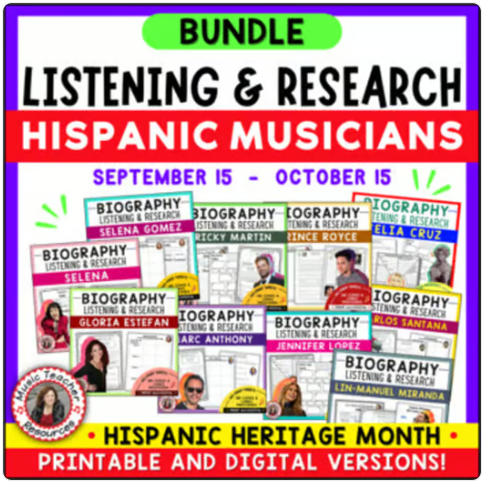
My Hispanic Musicians Listening and Research Bundle includes activities for ten musicians: Jennifer Lopez, Ricky Martin, Gloria Estefan, Carlos Santana, Celia Cruz, Selena, Prince Royce, Selena Gomez, Marc Anthony and Lin-Manuel Miranda.
The resources also include timelines, research organizers and guided listening activities, allowing you to explore selected musicians in greater depth when time permits.
My Hispanic Musicians Listening and Research Bundle includes activities for ten musicians: Jennifer Lopez, Ricky Martin, Gloria Estefan, Carlos Santana, Celia Cruz, Selena, Prince Royce, Selena Gomez, Marc Anthony and Lin-Manuel Miranda.
The resources also include timelines, research organizers and guided listening activities, allowing you to explore selected musicians in greater depth when time permits.
3. Combine Biography Research with Guided Listening
Help students connect a musician’s life and cultural background with the music they create. Begin with a biography research activity, then invite students to listen closely to several of the artist’s songs.
Students can investigate the musician’s early life, musical influences, achievements and career highlights before completing a timeline or written biography. Guided listening questions can then encourage them to identify instruments, tempo, dynamics, mood, musical style and other features they hear.
For a deeper listening activity, students could compare two songs by the same artist and discuss how their sound, mood or performance style differs. This approach works particularly well as an independent research project, music appreciation lesson or ready-to-use sub plan.
4. Map Musical Traditions Across the Spanish-Speaking World
Help students discover the diversity of Hispanic music by exploring traditions from different countries and regions. Assign each student or small group a location and ask them to investigate a musical tradition associated with it.
Possible examples include mariachi from Mexico, Son Cubano from Cuba, merengue or bachata from the Dominican Republic, cumbia from Colombia, tango from Argentina and Uruguay, and flamenco from Spain.
Students can locate their country on a map and identify the tradition’s characteristic instruments, rhythms, cultural influences and social purpose. They might also select a short listening example to share with the class.
Display the completed research as posters, digital slides or information cards placed around a large classroom map. By the end of the activity, students will have created a visual guide demonstrating that Hispanic music encompasses many distinct cultures, histories and musical styles.
5. Extend a Word Search into Music Research
A musician-themed word search can be more than a quick puzzle. The names, places, songs and musical terms hidden within it can become starting points for further investigation.
After completing the puzzle, ask students to choose several words and explain how each one connects to the featured musician. They could then write a short biography, create a fact file or respond to questions about the artist’s background, musical style and achievements.
Add a listening component by playing one of the musician’s best-known songs while students work. Afterwards, invite them to identify the instruments, mood, tempo and musical features they noticed.
The Carlos Santana Word Search and Written Response Activity combines an engaging word search with opportunities to investigate Santana’s life, music and influential career. It works well for independent learning, early finishers or a ready-to-use music sub lesson. 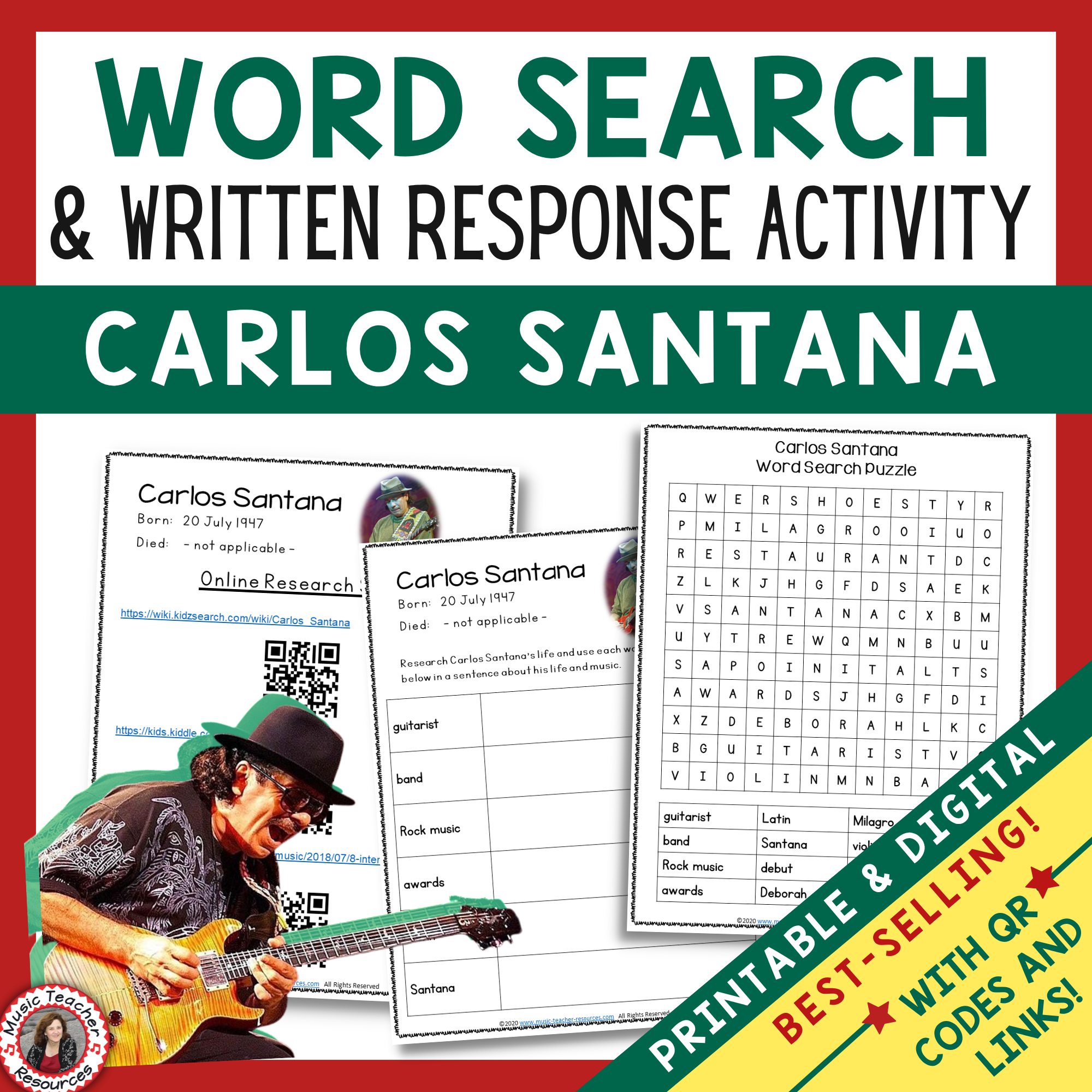
6. Explore an Afro-Cuban Clave Rhythm
Introduce students to the clave, a repeating rhythmic pattern at the heart of many Afro-Cuban musical traditions. Begin by listening to an appropriate example and ask students to identify the recurring pattern that helps organize the music.
Teach the five-note 3–2 son clave using clapping or body percussion. Once students can perform it confidently, divide the class into groups and layer the clave with a steady beat, a simple bass rhythm and additional percussion patterns.
Students can then create and perform their own short rhythmic arrangement using classroom percussion instruments, desks or body percussion. More advanced students might compare the 3–2 and 2–3 clave patterns and listen for examples of how these patterns interact with other musical parts.
This practical activity develops rhythmic accuracy, ensemble skills and active listening while introducing students to an important element of Afro-Cuban music.
7. Investigate Musical Storytelling with Lin-Manuel Miranda
Explore how composers and songwriters use music to develop characters, communicate emotions and move a story forward. Lin-Manuel Miranda’s work provides an engaging starting point, with music from productions and films including In the Heights, Hamilton, Moana and Encanto.
Choose a classroom-appropriate song or excerpt and ask students to consider how rhythm, tempo, instrumentation and vocal delivery contribute to the storytelling. How does the music reveal something about a character? What emotions does it communicate? Would the scene have the same impact without the music?
Students could compare two contrasting songs, create a character-and-music profile, or write a short reflection explaining how one musical feature strengthens the story.
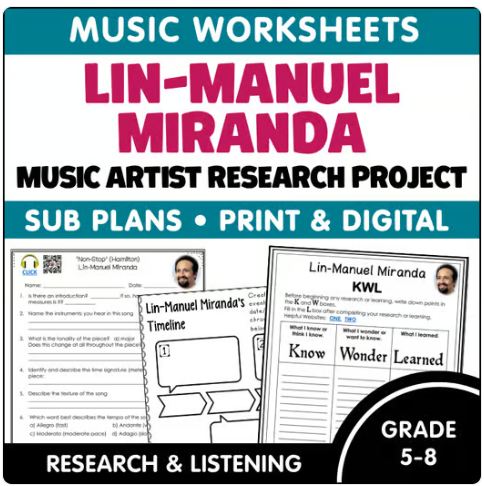
The Lin-Manuel Miranda Music Listening Activities and Biography Research Worksheets combine biographical research with structured listening activities, making them suitable for music appreciation lessons, independent projects or music sub plans.
8. Compare Traditional and Contemporary Performances
Help students explore how music changes as it travels between generations, cultures and musical styles. Select two contrasting performances of the same song and ask students to listen for similarities and differences.
Students might compare a traditional performance of the Mexican song “La Bamba” with Ritchie Valens’ rock-and-roll version or listen to Tito Puente’s original recording of “Oye Como Va” alongside Santana’s later rock interpretation.
Ask students to compare the instrumentation, tempo, rhythm, vocal style, structure and overall mood of the two versions. Which musical features have been preserved? What has changed? How does each performance reflect its time, audience or musical genre?
Students can record their observations in a comparison chart before discussing which version they prefer and supporting their choice with musical evidence. This activity builds critical listening skills while showing how musicians reinterpret and build on existing musical traditions.
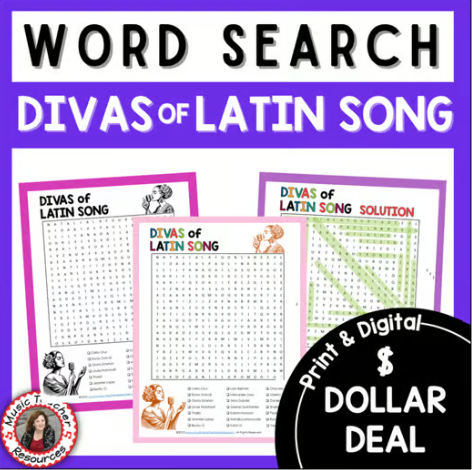
9. Introduce the Divas of Latin Song with a Word Search
Use a word search to introduce students to women who have helped shape Latin music across different generations and musical styles.
The Divas of Latin Song Word Search features 21 performers, including Celia Cruz, Mercedes Sosa, Gloria Estefan, Linda Ronstadt, Selena Quintanilla, Shakira, Jennifer Lopez, Natalia Lafourcade, Rosalía and Karol G. It provides a simple, low-prep activity for independent work, early finishers or a music sub lesson.
As an optional extension, ask students which names they recognize and invite each student to choose one unfamiliar performer to investigate or listen to. The class can then share a few facts or listening discoveries in a brief follow-up discussion.
10. Create a Hispanic Heritage Music Showcase
Bring the month’s learning together with a student-created Hispanic Heritage Music Showcase. Working individually or in small groups, students choose a musician, song or musical tradition they have encountered during the unit.
Each presentation could include the musician or tradition’s cultural background, important musical features, characteristic instruments and a short, classroom-appropriate listening example. Encourage students to explain why they selected their topic and what they would like their classmates to notice in the music.
Students might present their findings through a poster, digital slide, recorded introduction or short live presentation. You could also arrange the projects as listening stations, allowing students to move around the classroom and explore each other’s selections.
The showcase provides an engaging way for students to demonstrate their research, listening and communication skills while celebrating the diversity of music represented during Hispanic Heritage Month.
Bringing Hispanic Heritage Month into the Music Classroom
Hispanic Heritage Month provides a valuable opportunity for students to encounter musicians, musical traditions and cultural perspectives they may not otherwise explore. Whether you choose one listening activity or develop a month-long unit, encourage students to listen closely, ask thoughtful questions and recognize the diversity that exists across Hispanic cultures.
You do not need to complete all ten activities. Select the ideas that best suit your students, timetable and curriculum, or combine several to create a short Hispanic Heritage Month music unit.
If you would like ready-to-use materials to support your lessons, explore the complete collection of Hispanic Heritage Month music resources from MusicTeacherResources.
Would you like more music teaching strategies? Check out these related posts to keep your lessons fresh and interactive!
Blog Post: Top Tips for Planning a Student Concert
Blog Post: 10 Proven Classroom Management Strategies
Blog Post: 8 Ways to Use Google Slides in the Music Classroom
Blog Post: 10 Fun and Effective Music Class Seating Plan Ideas

Sign up to receive the monthly MTR newsletter and gain exclusive access to the
FREE Resource Library for music teachers!
